
| |
Sidcup Lapidary & Mineral Society
Minerals,
Crystals and Gemstones
containing
Inclusions
evening
Monday 1st February 2011
Almost a full house of members turned out for this evening as well as a few
prospective new members.
I think an enjoyable evening was had by all.
Inclusions are for the most part microscopic minerals, (solid,liquid
or gas) found within a host mineral, crystal or gemstone - trapped as part
of the growth development of the host crystal.
Inclusions formed before the development of the host crystal are
termed PROTOGENETIC (Solid inclusions only). Those formed and trapped
simultaneously with the host are SYNGENETIC (solid, liquid or gas). EPIGENETIC
inclusions are those developed after the growth of the host crystal.
On the evening a number of small displays from
personal collections were on show. One or two facetted gemstones were on view
but one Fluorite Egg from France (Margaret’s collection) had a curious
colourless crystal trapped within. A number of suggestions
as to its identification were made but no final conclusions could be drawn.
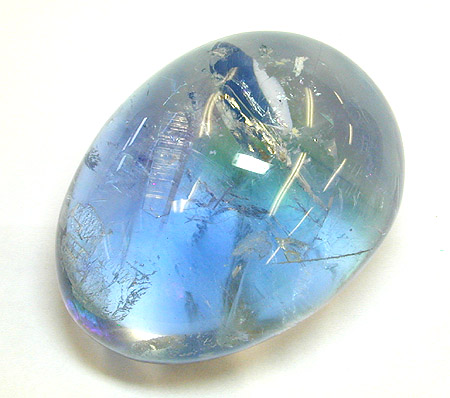
A
selection of near transparent quartz crystals from Ireland was on display from
Paul’s collection. All self collected, these had microscopic inclusions
of dark gray-green chlorite suggesting that these might be from an alpine type
deposit. Another superb quartz crystal group from Switzerland showed a similar
association.
A computer
slide show of inclusion images was on show and a few members brought microscopes
to help view some of the inclusions in crystals brought in by other members.
Here are one or two of the items that created interest:
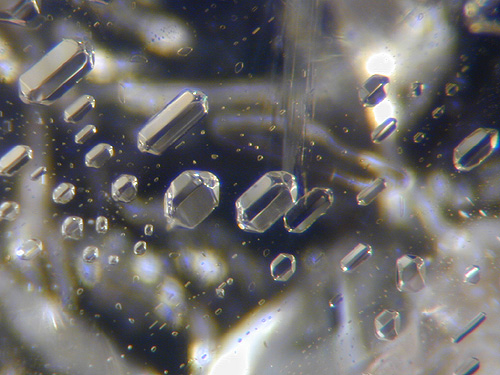
An array of parallel
grown negative crystals within a fragment of quartz from Wales.
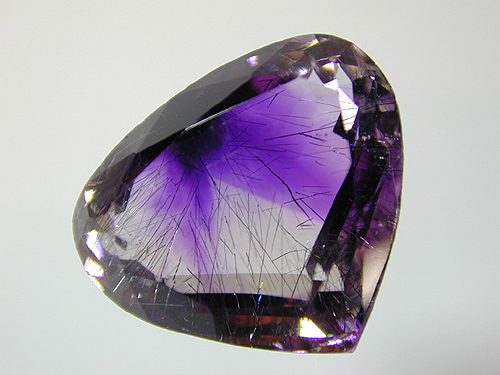
Hematite "Ribbons" trapped inside a facetted amethyst.
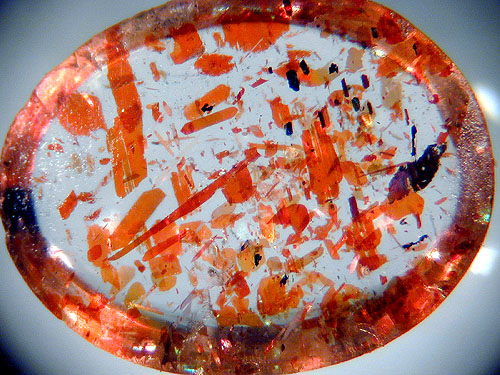
Very thin, near transparent red hematite flecks inside a cabochon of Feldspar
- Indian Sunstone.
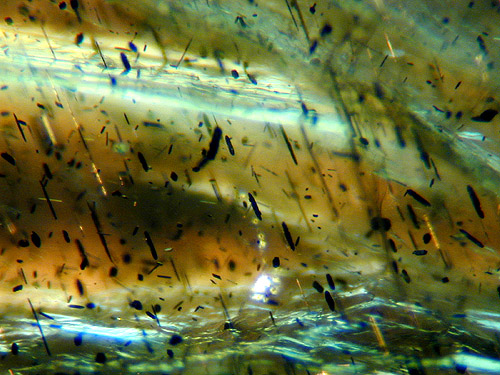
Another Feldspar, this time Labradorite from Madagascar, with tiny black rods
of Ilmenite - aligned in accordance with the structure of the feldspar.
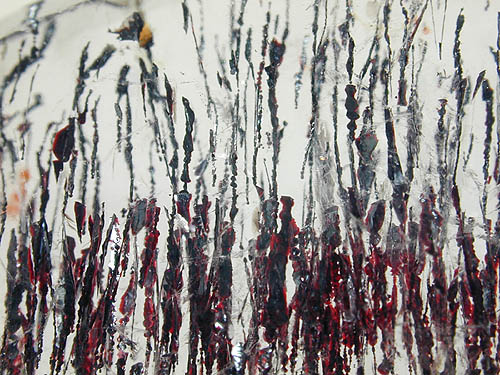
More Hematite,
This time developed as 'stringers' within a polished quartz from Brazil.
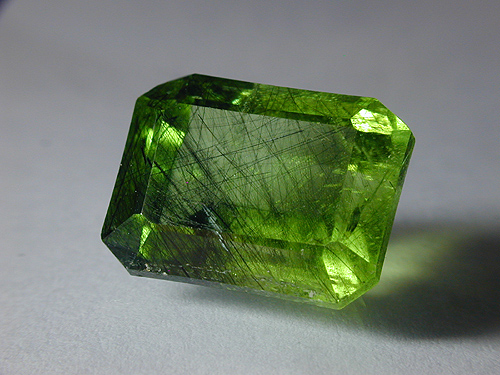
Ludwigite inclusions
inside a facetted Peridot from Pakistan.
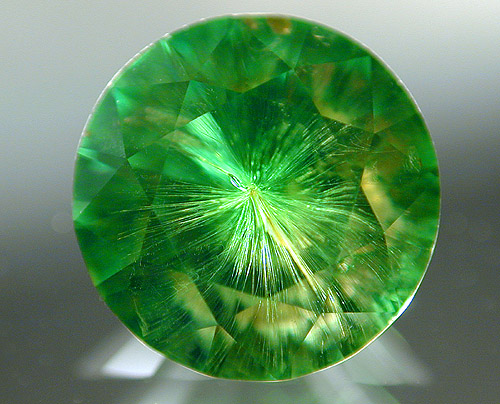
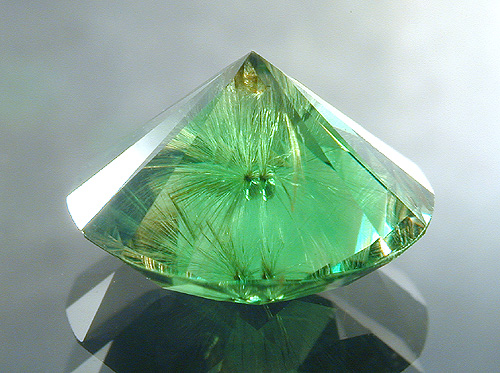
Two images of a Demantoid
Garnet from Russia showing fine "Horse-tail" like fibres of "Byssolite"
emanating from a tiny black chromite core.
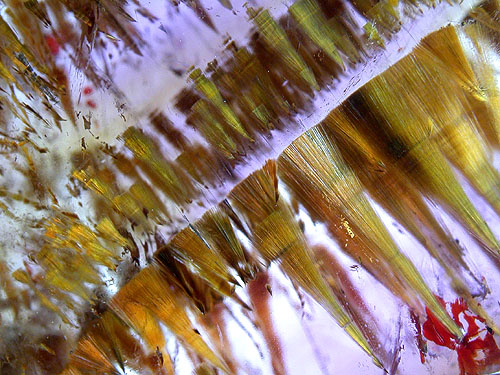
Goethite sprays (commonly
mistaken for Cacoxenite), forming shallow fans in layers in a pale amethyst
from Brazil.
Notice the thin red flake of Hematite in the bottom right corner of the photograph.
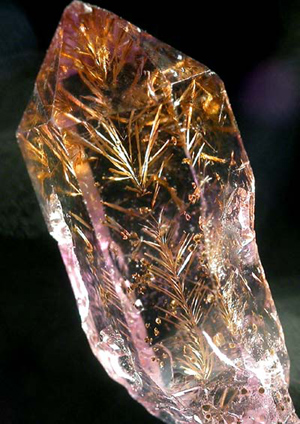
Goethite again, this time
forming a firework display inside a crystal of amethyst from the Tamil Nadu
area of India.
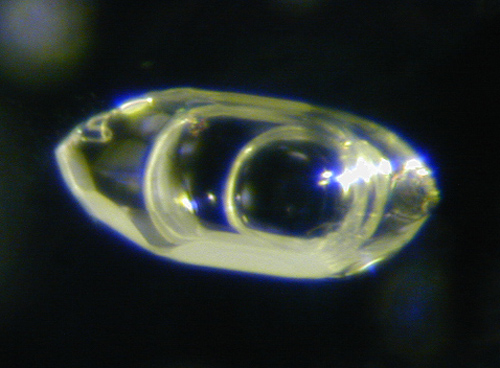
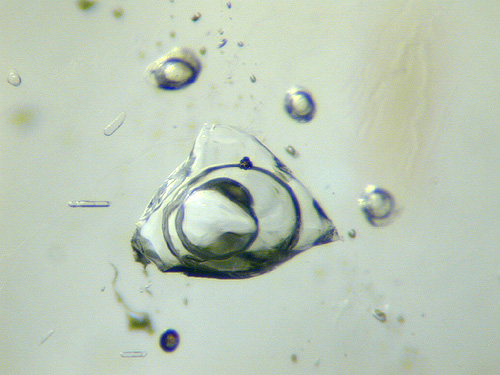
Topaz From Brazil is the
host in the two images above.
These inclusions have two immisible liquids and a central gas bubble.
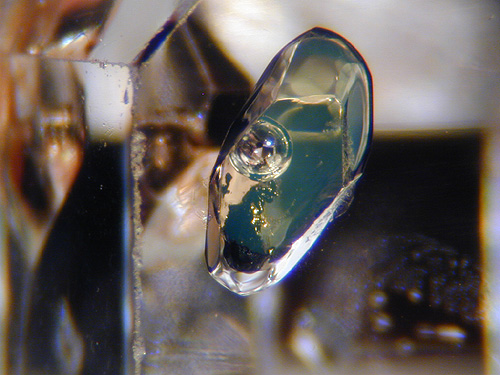
Finally, a negative crystal
found inside a quartz crystal from Pakistan.
This is a three phase inclusion (Solid, Liquid and Gas).
Trapped within the negative crystal is a gas bubble (most likely Methane) and
the pale yellow liquid is natural oil similar in chemistry to Benzene. The solid
black material is bituminous in nature.